Chasing the next solar eclipse: When, where and how to see it

 Getty Images
From scouting the optimal location to securing the right equipment, many details go into eclipse chasing. Here's how to make sure you find yourself in the right place at the right time.
On 8 April 2024, I sat atop a grassy hill in Imperial, Missouri, waiting for the Sun to disappear. A solar eclipse was coming, and I was in the path of 99% totality.
I was anxious, but exhilarated; I'd missed the frenzy of the American solar eclipse in 2017 and vowed I wouldn't miss the next. On the hilltop, my family and I played with shadows, each of us donning the flimsy solar viewing glasses that would help us witness the phases of the eclipse as the Moon's shadow grew closer to the Sun. We ate round sweets – Oreos and Moon Pies – to mark the occasion.
Gradually, the sky darkened, the birds fell silent and a chill settled in the air. A pair of deer stood at the edge of the forest, unmoving. Our hilltop was now enveloped by blackness; utterly frozen in time and space.
Then, the sky brightened, and the world was back just as quickly as it had disappeared. I was awestruck. All was as it had been, but I knew I was forever changed.
My experience is hardly unique; that day, I was just one of many modern eclipse hunters, chasing after what is truly a once-in-a-blue-moon experience. Case in point: between 2026 and 2030, there will be just a few total solar eclipses, starting with the annular solar "ring of fire" eclipse on 17 February, giving astro-curious travellers limited opportunities to experience the path of totality. Preparation – from scouting optimal locations to booking accommodation – is essential. And with total solar eclipses set to sweep across Antartica, Iceland, Spain, Egypt and North Africa in 2026 and 2027, astronomers and space travel specialists say now's the time to start. Here's how.
 Getty Images
When (and where) to see the next eclipses
In 2026, the total solar eclipse will take place on 12 August. The path of totality will pass across the Arctic Ocean, eastern Greenland, western Iceland and northern Spain.
Antarctica and the southernmost Southern Hemisphere: On 17 February, an annular solar eclipse swept across remote East Antarctica. An elite few experienced nearly two full minutes in the path of totality, while a partial eclipse was visible in other parts of Antartica as well as the southernmost parts of South America and Africa.
Spain: The August 2026 solar eclipse will brush across Mallorca, Menorca and Ibiza, where you can witness the one and a half to two minutes of totality over the Balearic Sea; the clifftop Jumeirah Mallorca has been already cited as a prime potential viewing location. Mountainous mainland areas in north-central Spain, including the medieval cities of Burgos and Soria, also offer good bases. Wilderness Travels is among many operators running 2026 eclipse tours in Spain, featuring an eclipse day experience on a hilltop winery and talks with astrophysicist and veteran eclipse chaser Dr Alex Filippenko.
Did you know?
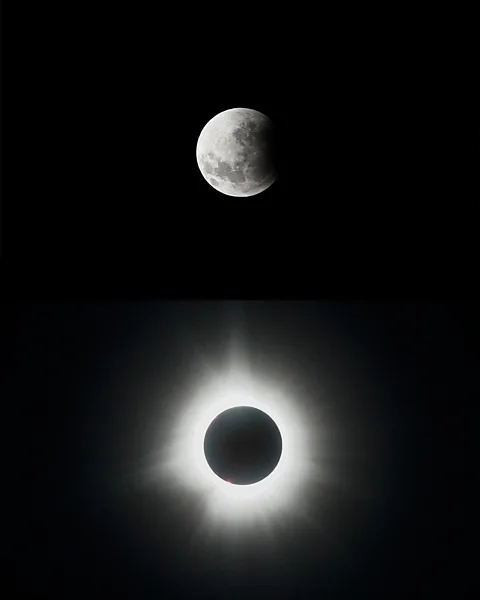
There are two types of eclipses. A lunar eclipse takes place during the full Moon when the Earth's shadow blocks the Moon; a solar eclipse occurs at the new Moon phase when the Moon's shadow blocks the entire Sun. Due to the narrow path of totality during a solar eclipse, caused by the Moon's small shadow, a solar eclipse is visible from a much narrower strip of Earth than a lunar eclipse.
Iceland: Maximum totality, lasting two minutes and 18 seconds, will be experienced in Breiðafjörður Bay, between the Westfjords and the Snæfellsnes Peninsula. Hiking enthusiasts can join a guided glacier hike and experience the eclipse from the summit of the Snæfellsjökull glacier. Or, join a six-day tour to witness the eclipse from Arnarstapi, a remote fishing village on the Snaefellsnes Peninsula's southern coast. Glaciers, volcanoes and black sand beaches will offer an otherworldly backdrop to the event.
Greenland: The path of totality, lasting roughly two minutes and 17 seconds, will encompass remote, uninhabited sections of Greenland's eastern coast and sea. Your best bet is a cruise, such as New Scientist Discovery Tour's Greenland Expedition, navigating Scoresby Sund for optimal viewing on eclipse day. Polar Latitudes Expeditions also runs Greenland eclipse cruises, bringing guests to the wild Blosseville Coast to witness the eclipse among glaciers.
 Getty Images
In 2027, the solar eclipse will take place on 2 August, passing across southern Spain, North Africa and the Middle East. This will be the longest land-based eclipse of the 21st Century, reaching a maximum duration of six minutes and 23 seconds in Luxor, Egypt. A sneak peek:
Egypt: Operators are planning 2027 Nile River eclipse cruises, including this 11-day adventure with Smithsonian Journeys. Siwa Oasis and Asyut will also be in the line of totality. Wilderness Travel has announced their 2027 Luxor solar eclipse cruise.
Morocco: Firmly in the line of totality for approximately four minutes and 50 seconds, Tangier will be Morocco's premier eclipse-viewing destination. Eclipse Travel's 11-Day 2027 Total Solar Eclipse package offers tours of Saharan panoramas and ancient medinas beyond the grand event itself.
Southern Spain: Malaga and Cadiz, in the path of totality for, respectively, one minute and 50 seconds and just under three minutes, will be prime viewing bases. Eclipse tours are available for southern Spain, like Smithsonian Journeys' 2027 eclipse voyage at sea along the coasts of Spain and Portugal, with stops in Cadiz and Coimbra.
For thrill-seekers, outfitters like Untamed Borders are now offering 2027 eclipse expeditions for Algeria, Libya and Puntland, which will be in the line of totality for several life-changing minutes each.
 Getty Images
Why eclipse travel is booming
Humans have marvelled at eclipses for millennia, from Mesopotamian sky-watchers to 19th-Century eclipse chasers. But it was the 1970 eclipse across the US East Coast and the first eclipse-chasing cruise two years later that transformed these celestial events into global travel events.
Today, eclipse tourism has gone mainstream, exploding into a multi-billion-dollar industry.
"For those keen to travel to witness a total solar eclipse, it is important to book as soon as possible," said Kevin Currie, director of New Scientist Discovery Tours, which runs eclipse trips. "This is primarily to ensure that you can secure a place on the best tours... in the best accommodation, ie, in a location near to the line of totality."
Astronomer Martin Griffiths links the increased fascination to the pandemic, commenting that during lockdown, "the only thing people could do was go outside and look at the night sky".
During previous eclipse-viewing experiences, Leah Crane, features editor at New Scientist, noted details like "streamers of light" appearing on the Sun's corona and the shadow of the Moon rushing towards her.
"Eclipse travel has become a phenomenon because it combines science, wonder and adventure all in one," commented Stephanie Derammelaere, executive director of Robert Ferguson Observatory in Northern California. "Experiencing a total solar eclipse, even once, has a way of changing your perspective on our place in the Universe."
Follow our experts' tips to take to ensure your eclipse experience is unforgettable
Location is everything: An eclipse lasts just a few minutes, so choose a destination that offers further adventures. As for the viewing itself, Griffith recommends a spacious spot with a good horizon.
Chase responsibly: Many upcoming eclipse destinations are experiencing a spike in tourists, so book locally owned hotels and tours to support smaller businesses. If flying, stay several days to minimise your carbon footprint
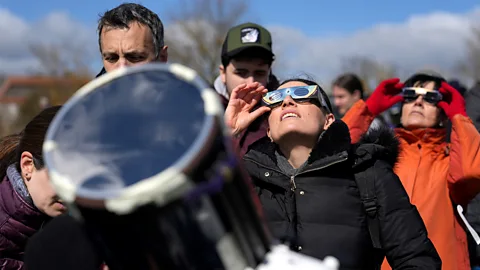
Optimise day-of experience: Travel to your eclipse-viewing location early to avoid traffic and procure your solar viewing glasses before they sell out. Know your viewing location's weather conditions, and give yourself time to simply look up and take it all in.
Stay present. Eclipses are fleeting; eliminate distractions. If you're a photographer, Crane recommends using a remote trigger.
More like this:
• The Himalayan village where you can see the cosmos
• The Canadian town under a sea of stars
• The last places on Earth to see truly dark starry nights
This cosmic marvel happens worldwide on average just four to seven times a year, in the form of partial, full and annular eclipses (when there's a ring of fire around the Moon). We'll likely never have the opportunity to see a solar eclipse in the same location twice in our lifetime, making each a special experience.
"If you've never experienced one, go and see one," Griffiths urged. "It's something you'll always remember for the rest of your days."
--
This article was originally published 10 November 2025 and has since been updated.
If you liked this story, sign up for The Essential List newsletter – a handpicked selection of features, videos and can't-miss news, delivered to your inbox twice a week.
For more Travel stories from the BBC, follow us on Facebook and Instagram.