People are selling your home address online. This privacy tool will help

 Serenity Strull/ BBC
There's a free automated tool that removes information about you from Google search results. For some reason, most people don't use it.
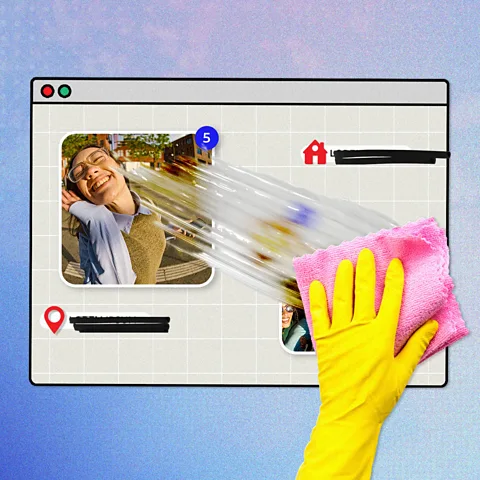
Did you know an untold number of companies are selling your name, home address, phone number and more online? Data brokers, as they're called, hand your information to anyone who wants it dirt cheap, from telemarketers and jealous exes to identity thieves. It puts your safety at risk.
But there's a tool that makes this information harder to find. It's a free service run by Google called Results About You. The problem is a lot of people don't seem to know about it.
Google constantly scrapes the internet to fuel its search engine, including sensitive details swept up from data brokers that you may want to keep secret. Through this process, the company inadvertently exposes you to all kinds of serious risks. But with one button, Results About You lets you ask Google to take your information down. It's that easy. And the company just updated the service to make it even more useful.
"This is kind of a no-brainer," says Thorin Klosowski, the security and privacy activist at the Electronic Frontier Foundation (EFF), a digital rights group based in the US. Results About You is one of the most important easy-to-use privacy tools on the market, he says. "In terms of stuff that's right there, no effort, it's probably number one. Quick access to this kind of information can be used in ways both grand and small."
 Serenity Strull/ BBC
After you set it up, Google emails you when it finds your name, email, phone number or address. You can review the websites it finds and with a click. In the US, Results About You can also flag Social Security Numbers and passport or driver's licence details. You need a Google account to use the automated service, but there's also a manual process if you find sensitive information in search results on your own, and you can use it without an account.
Leaving these details exposed puts you at all kinds of risks. You can find the tool here, but before you click the link, there are important caveats you need to understand.
What's the catch?
Criminals buy and sell sensitive data from hacks and data breaches on a constant basis. Google can't help you there. It's also important to understand that Results About You doesn't erase the information it finds on other webpages, it just removes the links from Google Search. However, that makes an enormous difference.
This tool won't give you total privacy and peace of mind, but it does create roadblocks so you're not an easy target. "If very dedicated people want to find you, they will," says Klosowski. "But Google is so ubiquitous and it is so easy to use, it's pretty helpful to get rid of the worst, most obvious stuff. You're peeling off the first layer of information that's easy to find." If you want to scrub the data entirely you need additional steps. (More on that below.)
Keeping Tabs
Thomas Germain is a senior technology journalist at the BBC. He writes the column Keeping Tabs and co-hosts the podcast The Interface. His work uncovers the hidden systems that run your digital life, and how you can live better inside them.
You also need to tell Results About Me what to look for, which means typing this sensitive information into Google's system. You might have reservations about handing this data to a company with its own history of privacy controversies. But Google probably has stuff like your address and phone number already, Klosowski says. After all, it runs one of the world's biggest data harvesting operations. Plus, Google makes specific privacy guarantees about the service.
A Google spokesperson tells the BBC that data submitted to Results About You isn't used for any other purposes. (And that counts for something. Companies can be fined millions or even billions of dollars if they're caught telling straight up lies about your privacy.) Google says it also uses rigorous security and encryption protocols.
How to get started
The tool is simple. Just visit the Results About You hub and fill out the form. You can also submit any problematic content you encounter on Google yourself. Open the menu with three dots next to the link in search results and hit "remove result", or use this page.
Google will also remove results containing information about family members in some cases. However, it won't just take anything you want off the search engine. Content on government and news sites is exempt, for example.
More like this:
• Not on TikTok? They're tracking you anyway
• The words you can't say on the internet
• AI is quietly editing all your photos
If you can't find information on Google, for a lot of people, it's like it doesn't exist. But if you want to obliterate the data from the internet altogether, that's harder to do. You can contact data brokers directly and ask them to delete your information. Some paid services will do that work for you. California residents can use the free state-run Delete Request and Opt-out Platform (Drop), which asks thousands of data brokers to delete your data simultaneously, the only government tool of its kind so far. If you want to go deeper, check out the EFF's guide to surveillance self-defence.
According to Google, more than 10 million people have used Results About You since it launched in 2022. That's a huge number, but it's a tiny fraction of the reported 1.8 billion Google accounts. You'll have a hard time finding another privacy tool that offers this much protection for so little effort.
--
For more technology news and insights, sign up to our Tech Decoded newsletter, while The Essential List delivers a handpicked selection of features and insights to your inbox twice a week.
For more science, technology, environment and health stories from the BBC, follow us on Facebook and Instagram.