'It was held against us': How Crash pulled off the most shocking win in Oscars history

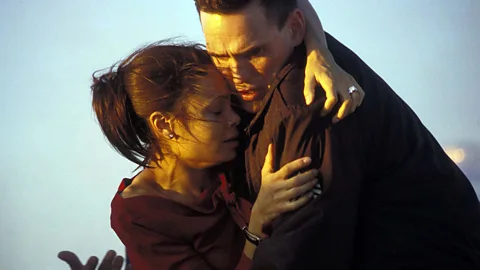 Alamy
AlamyTwenty years ago, the race-relations drama beat Brokeback Mountain to win best picture, in perhaps the awards' most controversial decision ever. People including the film's co-writer reflect on what happened.
On 5 March 2006, Paul Haggis's Crash became the 78th film to win best picture at the Academy Awards, a decision so shocking that Jack Nicholson, the actor who announced the winner, mouthed "woah" after reading out its name.
The ensemble drama about race and racism in Los Angeles proved a controversial choice: it was an underdog that beat favourite Brokeback Mountain, a breakthrough film for gay representation, to the top honour. In the 20 years since, the film and its victory continue to be pulled apart by online discourse. So, how did a low-budget indie film secure best picture, and was it really the worst decision in Oscars history?
The film was penned 10 years after the infamous Rodney King incident, in which a young African-American man in Los Angeles became a victim of police brutality, a trigger point for mass riots across the city. "Paul felt people thought the problem of racism was over and he wanted to speak to that," Crash co-writer and producer Bobby Moresco tells the BBC, noting that Haggis was also inspired by his own experience of being mugged by two black teenagers outside a Blockbuster video store: "They ran off with the videos and maybe some money he gave them, but in thinking about those two characters, he thought, well, who are they, and what are the other elements of their life? Where do those two guys go?"
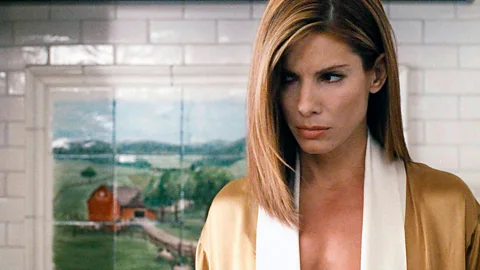 Alamy
AlamyIn January 2004, the film wrapped production after a 32-day shoot. Given its relatively tiny $6.5m budget, it boasted an impressive cast including Don Cheadle, Sandra Bullock, Thandiwe Newton, Brendan Fraser, and Matt Dillon, among others. In September, the film received a standing ovation at its world premiere at the 2004 Toronto International Film Festival. Lionsgate acquired the film for $3m on the very same day. "It's a terrific movie, but it's not an obvious awards contender," said Tom Ortenberg, Lionsgate's then president of theatrical films. "It's a word-of-mouth movie."
The race to the prize
On 6 May 2005, Crash came out in 1,864 North American theatres, earning $9m over the opening weekend, $55m domestically, and a worldwide total of $98.4m – a strong haul, given its budget. Lionsgate commenced the Oscars strategy by piggybacking on the film's home entertainment campaign with awards voters. "They had this brilliant idea to go all out on DVDs right before the end of the year, and remind everybody of this movie," says Moresco. After the film was nominated for a Screen Actors Guild Award for outstanding performance by a cast, Lionsgate took the unusual step of sending out over 100,000 DVDs in paper sleeves directly to all members of the guild. They recognised the crossover potential of votes from SAG members who were also voters in the Academy of Motion Pictures and Sciences, of which actors make up the largest branch.
Sending a copy to Oprah Winfrey also proved a winning move. She encouraged her talk show audience (around nine million viewers per day during her 2004-2005 season) to seek out the film and shared her own Crash moment. Winfrey claimed that she was denied entry to a Hermes store in Paris because of racial profiling. "Suddenly we were in the culture," says Moresco, and the phrase "Crash moment" entered the vernacular with an identifiable connection to the film.
Black organisations like the African-American Film Critics' Association, NAACP Image Awards and Black Reel Awards embraced the film, selecting it as their best film of the year, but when it came to more white, mainstream awards, Brokeback Mountain was beating them to the post.
However, this wasn't a simple David v Goliath story. Ang Lee's independent film, based on an Annie Proulx short story and starring Jake Gyllenhaal and Heath Ledger as star-crossed cowboys, was a groundbreaking moment for LGBTQ representation and acceptance. It was the most critically acclaimed film of the year, grossing over $178m globally against a $14m budget, and even luring audiences in conservative "red states" where the idea of a "gay cowboy romance" might not have been welcomed. It won best picture at the Baftas, Golden Globes, Critics' Choice Awards, Independent Spirit Awards, Producers Guild of America, as well as various critics' associations.
Still, Crash secured several accolades, including an Independent Spirit Award for best first feature; the SAG Award for outstanding performance by a cast; and Baftas for both Thandiwe Newton in best supporting actress and original screenplay for Haggis and Moresco, hinting at what might come at the Oscars and fuelling the competition between the two films. "There was a rivalry," Moresco says of the tension during various awards season excursions. "For whatever reason, we were never at the same table with those guys, but [Brokeback Mountain producer and co-writer] Diana Ossana was the loveliest person."
At the Oscars, Crash was nominated for six awards: supporting actor, original song, director, original screenplay, film editing and, of course, best picture. "After we won best screenplay, people said we were a shoo-in, but I never thought about winning best picture," says Moresco. "I just assumed it was Brokeback Mountain."
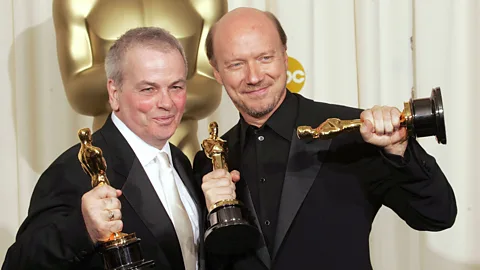 Alamy
AlamyThen the best picture verdict arrived, shocking everyone in the room. "Brokeback Mountain was a breakthrough film," Moresco explains. "Nobody had ever seen a relationship like that on film before, and God bless them, they made a heck of a movie, but it wasn't mine or Paul's fault that people voted for us instead of them. Somehow, that was held against us."
Why critics got exercised
The backlash started immediately, with some critics suggesting industry homophobia as the reason Brokeback Mountain lost; in a 2024 interview, Ang Lee revealed that he too agreed with this contention. Meanwhile, in an op-ed days afterwards, Proulx blamed both "Trash – excuse me – Crash" and the predominantly LA-based Academy voters, "many living cloistered lives behind wrought-iron gates or in deluxe rest-homes, out of touch not only with the shifting larger culture and the yeasty ferment that is America these days, but also out of touch with their own segregated city."
She wasn't the first to target Crash's calibre. In their reviews around its release, The New York Times called it "crudely manipulative", while The Boston Globe criticised the characters, decrying its "assembly line of screenwriting archetypes".
"It definitely makes white people feel good," says critic and film programmer Jourdain Searles, who felt it affirmed a simplistic white liberal idea of racism being something perpetuated by certain "bad" individuals, rather than a complex systemic and institutional problem within the United States. Gene Demby, journalist and co-host of NPR's Code Switch podcast, agrees, noting that its Oscars win came two years before Barack Obama entered the White House, which he believes ushered in more sophisticated conversations around racial discrimination. "I don't think a movie like Crash would have been received the same way had it come out in 2009," he says. "It felt very much like a movie for a certain kind of self-satisfied person who hadn't thought too much about race and power."
Indeed, it was only a few years after its win, with the advent of social media and a growing number of diverse blogs engaging with culture and politics, that critiques of the film really began to proliferate. Demby's 2008 review, posted to his now-defunct PostBourgie blog, was scathing, calling Crash "the worst movie" of the 2000s. His post was reblogged by celebrated author and journalist Ta-Nehisi Coates. In his 2009 piece for The Atlantic, Coates used a similar headline, quoted Demby directly, and argued the film, "is the apotheosis of a kind of unthinking, incurious, nihilistic multiculturalism. To be blunt, nothing tempers my extremism more than watching a fellow liberal exhort the virtues of Crash."
Since then, disdain for Crash has only strengthened, with critics zooming in on what they believe are unrealistic portrayals of ethnic minority characters. Robert Daniels, critic and contributing editor to RogerEbert.com, first watched Crash as an African-American teen growing up in Chicago and immediately took issue with its representation of characters like carjacker Anthony, played by rapper and actor Ludacris. "Black people aren't a monolith; what's authentic for one person can shift for another person," he tells BBC Culture. "But I grew up on the west side of the city in the late 90s, early 00s, where there was gang violence, so I know the Ludacris character, I know that guy, and this is not that guy."
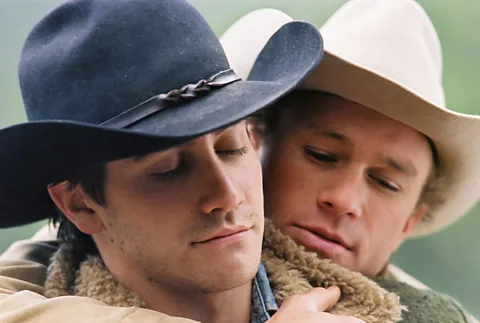 Alamy
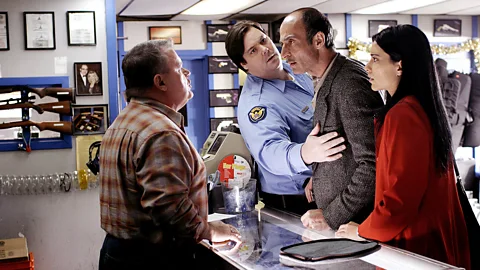
AlamySearles also questions the portrayal of Persian convenience store owner Farhad (Shaun Toub), who, after his shop is ransacked, ends up trying to shoot a kindly Latino locksmith he has previously hired, mistakenly believing he is responsible. "He's being persecuted in this post-9/11 world, but portrayed as angry, violent and not interested in communicating," she explains. "It's the most bad-faith reading ever. I'm supposed to believe that this man would just go and shoot someone because this happened to him?"
While Moresco "absolutely" understands the criticism, he says, "It's a mistake if people think that two white guys wrote it without input from somebody of colour." Moresco says they received input from an African-American producer, Anita Addison, then an executive at CBS, who was sent several versions of the script and had the film dedicated to her. "We tried to get as much input as possible from people who were living that life, in that identity."
More like this:
• The moment Cher wore the ultimate 'revenge' outfit
Yet as much as Crash presented a flawed cross-section of LA society "crashing into each other", as Don Cheadle's weary cop Graham Waters utters in the opening minutes, many felt it too often prioritised its white characters' perspectives. "[They] have interiority, and they're dealing with all these brown characters who are just stereotypes," says Demby, pointing in particular to Dillon's bent cop character, who stops and molests Newton's character Christine in front of her husband Cameron during a highway stop-and-search, only to rescue her from a car crash in a later scene. Newton herself told Vulture in 2020 that the storyline "neutralised the very real rage that African-American people feel", and that she didn't "buy into" the redemptive arc of Dillon's character. Indeed, the treatment of Newton's character is the element that has come in for most ire in the years since. "She's in that movie to be acted upon; she's the object, the mechanism for Matt Dillon's redemption, and we [also] spend more time on Cameron's [feelings of] emasculation [following her assault than her own]," says Demby.
Film journalist Stacy Wilson Hunt – host of podcast My Hollywood Story and author of a 2016 oral history of Crash's Oscar win – appreciated the film's unfiltered depiction of sexual assault – a moment which she says has become all the more potent in a post-#MeToo world. "As awful as that scene is, to me, it doesn't feel unrealistic," she says. But she too questions the way the film then ennobles the assaulter: "We're in this culture that has been going on for millennia, where someone can say 'Oh, I did these terrible things, but will you guys let me back into the prayer circle if I do this other nice thing?'"
In 2022, Haggis himself was found liable for raping film publicist Haleigh Breest in a civil trial and ordered to pay $10m damages. Haggis denied all the allegations and did not face any criminal charges. Breest said she was prompted to come forward after witnessing Haggis' public condemnation of Harvey Weinstein.
How the win looks now
Reassessing the film from a 2026 perspective, Demby says it feels even more jarring to him now, because "of a reckoning around race and policing, [linked to] what's happening with ICE". "In Crash, you can see the seeds of this moment," he says, but at the same time, he believes its storylines fail to offer meaningful commentary on the issue. "It doesn't think of policing as [systemically flawed]. It doesn't think of these things as calamities; it just makes them into [personal] dramas."
So, would a film like Crash still win best picture today? While explicitly "issue"-based films continue to do well at the Oscars, ultimately Searles and Daniels think not. "[At the time] it seemed forward thinking, a way to get a bunch of actors from different backgrounds into one story," says Searles. "So it was achieving a representation benchmark, but today, I don't think it would win."
 Alamy
AlamyYet Wilson Hunt describes Oscar voters as a "mercurial" breed, and believes anything is still possible. "Anything can be an Oscar movie if it has the right publicist behind it, if the talent are willing to promote, and if you have celebrity friends in the business hosting parties for the titles," she says. "Sensibility for the voters has little to do with the quality of the movie at the end of the day."
Moresco himself remains circumspect about the controversy over its win. "It didn't make me a better writer, and it didn't make us a better movie than those other five movies – it's all subjective," he shrugs.
So was it actually the worst decision in Oscars history? "I don't think it was the worst, but it's definitely up there," says Searles. For Daniels, it doesn't beat the Academy putting best supporting actress winner Hattie McDaniel, the first black woman to win an Oscar, at a segregated table the night she won for Gone with the Wind in 1940. "But in relation to other best picture winners, particularly in the modern era," he says, "it's probably the worst."
--
If you liked this story, sign up for the Essential List newsletter – a handpicked selection of features, videos and can't-miss news, delivered to your inbox twice a week.
For more Culture stories from the BBC, follow us on Facebook and Instagram.