Heating oil prices rise by more than £100 amid Middle East conflict

 Getty Images
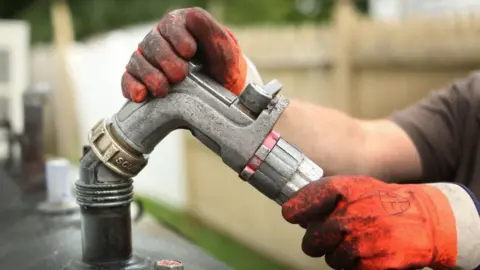
Prices for home heating oil have spiked amid the conflict in the Middle East - with some more than £100 more expensive than last week.
Global oil prices have risen after Iran launched strikes across the Middle East in response to ongoing attacks by the US and Israel.
On 26 February, the average price of 500 litres of home heating oil in Northern Ireland was £307.38, according to the Consumer Council NI (CCNI).
However, the price for the same amount from one provider in County Armagh was £395 on Monday. Another provider in County Down was selling 500 litres for £425.
Almost two-thirds of homes (62.5%) in Northern Ireland use oil for heating, the highest proportion of the UK nations.
Only 3% of households in England and Wales said oil was their only source of central heating, according to a 2021 census, while the figure stands at 5% in Scotland.
The CCNI said crude oil prices were "rising and remain unpredictable in the short term" due to the conflict but they were monitoring the situation.

Anthony Gillen, an oil supplier in the north west, said it has been "hectic" since the war broke out.
"The wholesale price went up and it just affected everything, at the minute we don't know what price to go with we just have to take it day by day," he told BBC News NI.
He said the company had lost money from pricing customers last week for fuel this week, compared to the rise in wholesale price.
"We were pricing people on Thursday/Friday for Monday/Tuesday delivery at £305 and its now £455 and there isn't anything we can do about it."
How much is home heating oil in Northern Ireland?
Raymond Gormley, head of energy at the CCNI, said things had "spiralled out of control really quickly".
"We're at the mercy of global energy markets and with the conflict in Iran – that's really spooked the markets and we're paying the price through our pockets here," he said.
Gormley added that consumers should only buy oil if they need it or they will add to "panic buying which is driving up price and making the situation worse".
On Monday, Brent crude, the global benchmark for oil prices, increased by 3.2% to $80 a barrel while the price of gas surged by 30%.
Iran warned vessels not to pass through the crucial waterway in the south of the country, through which about 20% of the world's oil and gas is shipped.
Will petrol prices go up?
Crude oil is a key ingredient in petrol and diesel, meaning higher oil prices could drive up prices at the pumps.
The AA motoring group says that over the next few weeks fuel costs could return to where they were at the start of the year.
That would be a change to the general trajectory of fuel prices, which have been falling on UK forecourts over the past few weeks.
Speaking on the Nolan Show, SDLP councillor Malachy Quinn said diesel at one garage was £1.30 on Monday morning and had risen to £1.38 by that evening.
Following a post on social media Quinn said he had received "a litany of comments" from people highlighting the same problem.

Martin White owns a filling station and said the price rises are out of his control.
"We have kept the prices down but tomorrow we will be forced to go up by an average of 4p a litre. We get a price for as next-day delivery from the wholesaler and this is the result of what is happening in Iran."
'One more thing to stomach'
BBC News NI spoke to people in Belfast city centre about the impact rising prices will have on their lives.
Ben Turner said the public had accepted "various different costs for a long time" and this is another rise "you have to stomach".

He added that rising fuel prices will only add to "already tight budgets".
"It'll be that factor on day trips, particularly with the nicer weather now, but actually will that trip up to the north coast cost that little bit more if the fuel prices go up? So that will be a factor in planning," said Turner.

Barbara Foster from Portstewart said all consumers can do is "hope for the best".
"Hopefully it won't be very long that this goes on for, then we've got the summer coming up so hopefully by the autumn things [will] have got more stable."
Tips for finding the cheapest oil
The CCNI's advice for customers is not to settle for the first quote you receive and that it is best to buy in bulk.
Its weekly oil price checker shows typical oil prices for 300, 500 and 900 litres and is updated every Thursday.
The organisation advises consumers to join a heating oil buying group, which sees communities pool orders from multiple households to negotiate better rates from suppliers.
They also advise consumers to settle the price with their supplier on the day of order in case the price increases by the day of delivery.
The NI Housing Executive also has an oil savings network which is free to join and open to all households who either own or rent their home, while the NI Oil Federation also offers a pre-payment scheme,
Fuel stamps also allow residents to budget and spread the cost by purchasing stamps from local retailers and using them to pay for their oil delivery.