Can an AI recruiter really spot a good carer?

 JAMIE NIBLOCK/BBC
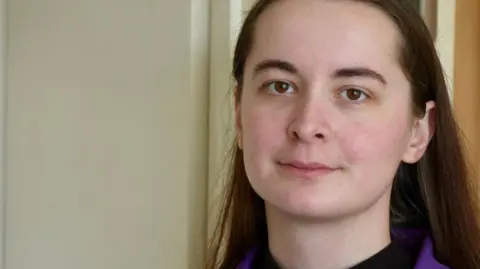
Just half an hour after she applied for a care job, Mollie Cole-Wilkin's phone rang.
Sitting at home, she answered it. But the voice on the line was not a human's.
She was speaking to "Ami", an AI‑powered telephone interviewer developed by homecare company Cera.
"It didn't sound like AI at all. My mum was in the other room. We thought it was just another person. We just couldn't believe it," she says.
The call lasted about five minutes, and at the end, Cole-Wilkin, of Long Stratton, Norfolk, was told she had passed the screening.
It then made her an appointment for a one-to-one interview, with a real person. After successfully passing this, she was told she had the job.
The system, which is audio-only, has already screened 14,600 applicants in total, recruiting 1,028 carers.
Cera, one of England's largest homecare providers, supports 2.5 million visits a month and says its AI system helps speed up hiring in a sector facing rising demand.
The adult social care system is likely to need almost 440,000 more care workers by 2035.
Ami conducts initial interviews using the same script every time, scoring applicants out of 100 based on their attitude and experience.
 JAMIE NIBLOCK/BBC
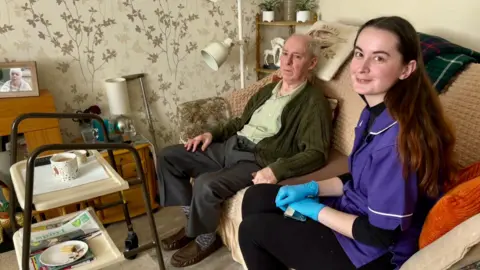
Cole-Wilkin, 23, had previously left a job in a GP's surgery after a difficult experience and moved into administration, but missed "being physically helpful for other people" and "making people smile".
When she tried applying for care roles again, the AI felt unexpectedly encouraging.
As someone who stammers occasionally, she found it less intimidating than a human.
"It was nice to know that I wasn't going to be judged... I get very anxious, especially face to face," she says.
"It did give responses like 'I'm happy you shared that with me' and it was quite a rewarding conversation."
Cera says Ami has halved the time from application to first interview and doubled job offers for the same recruitment spend since its launch in August 2025.
It says standardised questions reduce bias and give candidates like Mollie, who find traditional interviews stressful, a fairer chance.
The system is built to meet Care Quality Commission standards, it adds.
 JAMIE NIBLOCK/BBC
Not everyone is won over, however. Critics say algorithms cannot read the subtle cues that matter in care.
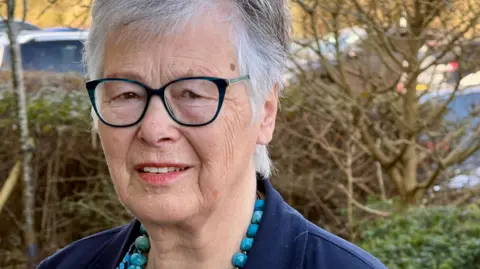
Janet Beacham, director of Swift Care Solutions in Colchester, is a former nurse with more than 45 years' experience in the healthcare sector and believes only a human can judge genuine empathy.
"If they haven't got care in their heart then they're not going to be a good carer... They've got to have the right personality and have the right skills," she says.
For Beacham, human intuition still matters.
"The first screening should be a review of the CV and then an initial telephone conversation, but actually a person‑to‑person one," she says.
She argues that care workers enter clients' homes as guests, and only a person can sense whether someone is genuinely suited to such a role.
 NIKKI FOX/BBC
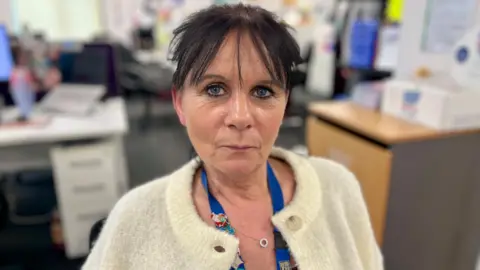
But Lucy Kruyer, branch manager at Cera's Colchester office, says the technology is now essential.
Speeding up recruitment, she argues, helps unblock hospital discharge delays.
"People don't want to be laying in a hospital waiting for care because they can't come home without the care," she says.
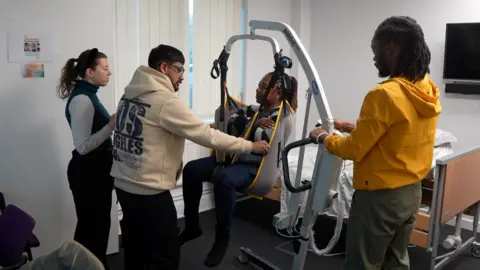
Human recruiters still run checks and lead in‑person training before anyone starts work.
Putting Ami to the test
So, what is a phone call with a robot recruiter like? I decided to put Ami to the test.
The system uses a soft, calm female voice; a familiar choice in tech, though evidence that female voices build trust is limited.
She asks why I want the role and checks my experience, right to work and driving licence.
When I push her about car insurance costs, she says they vary but that some carers pay about £30 to £60 extra per year. Questions about training receive clear answers.
To see how she handled pushback, I tested her. When Ami asked about shifts, I said I couldn't work Saturdays because I'm essentially a taxi service for my child.
Nor could I work Friday nights, I told her, because I liked fish and chips on a Friday.
Ami stayed perfectly calm. Fish and chips, she said, sounded like an important family tradition, but stressed that carers did need to work at least one weekend day.
I offered Sundays instead. She checked: Sundays yes, Friday nights and Saturdays no. I confirmed – and I'd passed the screening.
 Cera
CeraLarge language models such as Ami work through patterns and associations. In this case, that is enough to move a candidate forward before a human picks up the process.
Cera receives 500,000 applications a year. Traditional recruitment, it says, leaves applicants waiting days or weeks – long enough for many to drop out or find other jobs.
Founder and chief executive Dr Ben Maruthappu argues he is expanding, not reducing, the workforce.
"We're using AI to recruit more people faster, not replace them… Recruitment and staffing remain major challenges for health and social care," he says.
Ami can call multiple candidates at once, he says, so cuts waiting times "from days to seconds", freeing staff to supervise carers and focus on training and safety.
 JAMIE NIBLOCK/BBC
Cera also uses a separate AI tool to arrange cover when carers call in sick. Kruyer says this used to involve hours of phoning around.
"I've got 177 carers out on the floor today so for me the phones are constantly ringing," she says.
"We can't be answering phones and trying to get cover at the same time... We know it's working in the background, giving us a green light when we've got a carer that's saying yes."
Carers then confirm details with staff. Preventative AI is also used in the Cera app to help workers log clients' symptoms and pick up issues such as urinary infections, and it has also helped the government roll out a predictive falls tool.
Maruthappu believes the bigger risk is standing still.
"The real question shouldn't be whether we use AI – it should be how we use it to widen opportunity," he says.
Cera is now licensing its recruitment agent to companies in other sectors, including dentistry.
In March 2025, the government announced it would take a "test and learn" approach to funding AI in the public sector, to "push innovation" but has yet to develop a legal framework for its use in care.
What do others think of the use of AI in recruiting care workers?
Gavin Edwards, head of social care at trade union Unison, says technology can play a valuable role in freeing up staff time, allowing for better care.
"With major workforce shortages across the social care sector, help in increasing capacity and easing workload pressures is welcome," he says.
"But AI can't wash or clean anyone, issue medication or carry out the many complex tasks care workers do.
"Nor would it be wise to use it to make decisions about the care needed by each individual. Those are tasks for trained, skilled professionals.
"There are also important considerations for recruitment. Any use of AI must be transparent, fair, and fully compliant with equality and employment laws."
A spokesperson for the Local Government Association says technology can help build capacity in care when used alongside human support but warns that care is "fundamentally person-centred".
It says AI must be co-designed with people who use care services and that "a human in the loop" should always oversee decisions, with strong safeguards in place.
The Department of Health and Social Care has been asked to comment.
Follow Essex news on BBC Sounds, Facebook, Instagram and X.