'With music therapy, the world comes alive for him'

 BBC/ Emily Johnson
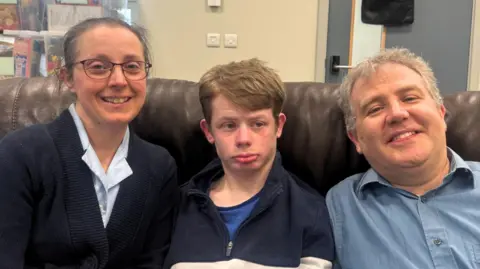
Ever since Peter Nash was a toddler, music has been a way of expressing himself when other forms of communication were "almost impossible", according to his parents.
The 21-year-old from York was born with a rare genetic condition which means he cannot speak or use sign language.
But music therapy delivered by North Yorkshire Music Therapy Centre has enabled him to "light up" and interact with others.
Now the charity hopes to raise £100,000 to continue providing therapy to young people like Peter, as well as adults with mental health challenges and the elderly living with dementia.
Ollie Nash, Peter's dad, said that seeing his son engage with music was one of his "great joys".
"Peter doesn't express himself, but when there's music, you can see that the world comes alive for him," his dad said.
Karen Nash, Peter's mum, added: "He can go from being completely blank and you're wondering if he's even part of the world to that sudden spark.
"He might flap his arms or jump up and down and you can just see the joy and excitement in him that the music is in him and that makes him happy."
 BBC/Emily Johnson
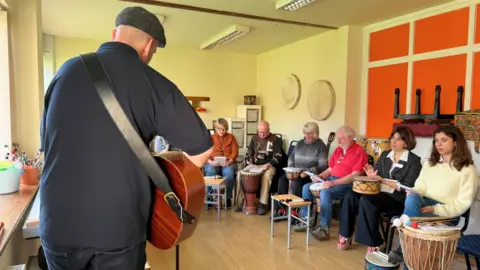
North Yorkshire Music Therapy Centre also puts on weekly sessions for the Sunshine Singers Dementia Friendly Choir at their base in Hovingham.
Free to access, elderly participants get to play the drums and have a sing-along every Wednesday.
Diana Morgan, who has volunteered at the choir for two and a half years, said: "Sometimes, some of them, they've maybe had a tough day or a tough week and they come in a bit miserable.
"When they go out, the physical difference, they're brighter, they're smiling, the colour changes, they're all really happy to have been here, which is just amazing."
Ben Herron, who leads the songs with his guitar, added it was a "great cognitive exercise" and could bring back memories for people.
He pointed out it was also a social gathering, where people who might not otherwise get out of the house could have tea, cake and a good natter.
 BBC/Emily Johnson
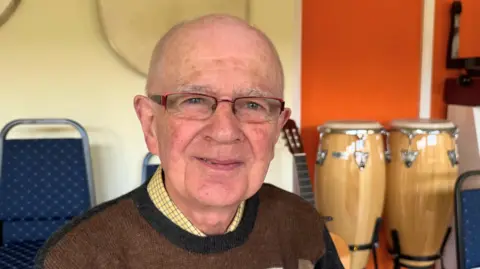
Robin Bellfield, 82, from Rillington, has been a Sunshine Singer for more than three years, after discovering his love of music as a boy.
"It's magic. Every time I come, I feel welcome and just enjoy it so much," he said.
"There is a sad part, because although I think it's the best thing for the people who have dementia, I know that eventually, their dementia is going to get so bad that they'll stop coming.
"But it just adds an extra dimension to my life and keeps me young."
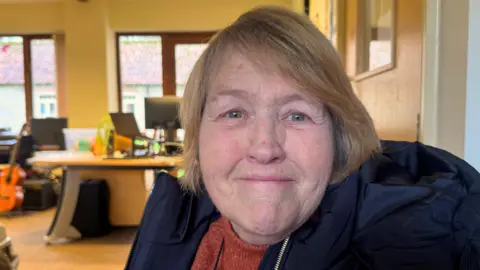
Sue Selby, 73, joined the choir after she had a stroke.
"I've not got a very good voice, but I just enjoy doing it and being with people," she added.
 BBC/Emily Johnson
The charity said its £100,000 appeal would safeguard their service for the future by funding specialist music therapists and expanding sessions to more people.
Last year, it delivered more than 850 music therapy sessions, supporting more than 250 people.
Director Laura Festa said: "All our community work is free for participants and when we work in different organisations, we pay 50% of the fee.
"We set up the appeal because we would like to keep our community work free and also subsidise schools, care homes and hospices, which have tight budgets."
Listen to highlights from North Yorkshire on BBC Sounds, catch up with the latest episode of Look North.