Transport still contributes most greenhouse gas

 Tracey Cahill/BBC
Latest figures show transport remains the biggest contributor to greenhouse gases in Guernsey.
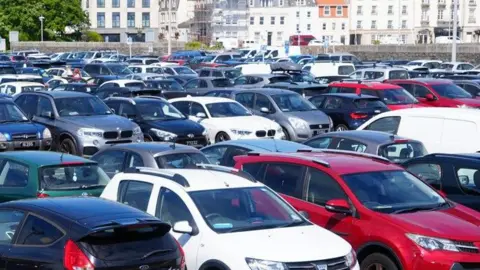
Transport, including air and sea travel, produced about 37% of emissions locally - with road transport responsible for half of that, according to government figures for 2024.
The latest report from the States gives figures for 2024 - when overall emissions dropped by nearly 4% over the year to 292 kilotons, which equates to approximately 4.5 tonnes per person.
The total has halved since 1990 partly because of a cable link with France, meaning less electricity is generated on the island, but the power plant was still responsible for around 7% of emissions.
An increase in greenhouse gases globally is causing temperatures to rise, by trapping thermal energy which heats up the atmosphere, like heat trapped in a greenhouse.
Burning fuel for energy, including heating, electricity, transport and industry accounts for 78% of harmful emissions in Guernsey and landfilled waste is the next largest contributor, the States said.
The majority of emissions were from carbon dioxide, released by burning fossil fuels for energy but also include methane gas from decomposing rubbish on landfill and from farming and nitrous from burning fuel, waste disposal and agriculture.
Transport emissions have dropped by 34% between 1990 and 2024, with a 5% drop between 2023 and 2024, the report said.
The data team estimated that Guernsey's total greenhouse gas emissions for 2025 would be 288 kilotons.
Follow BBC Guernsey on X and Facebook and Instagram. Send your story ideas to channel.islands@bbc.co.uk.