UK Iranians 'worried sick' amid 'heartbreaking' war

 BBC
BBCIranians living and working in Oxford say they are "worried sick" about their friends and family members amid the ongoing conflict in the Middle East.
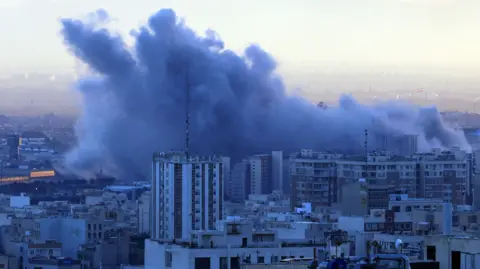
Israeli and US forces launched air strikes on Iran over the weekend - killing the country's supreme leader Ayatollah Ali Khamenei, alongside more than 1,000 Iranian civilians.
In retaliation, Iran has responded by conducting aerial attacks on sites across the region - including in the United Arab Emirates, Qatar and Saudi Arabia.
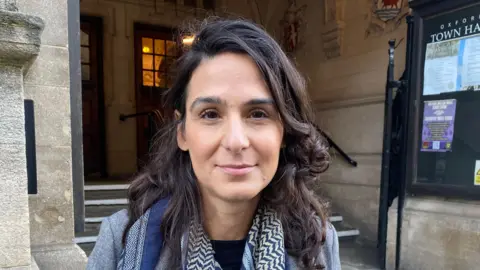
Hosnieh Djafari-Marbini, who came to the UK as a refugee from Iran at the age of 13, said the situation was "heartbreaking".
"I'm worried sick about friends, family and loved ones," the NHS doctor, and Oxford city councillor, said.
"Practically speaking, we are struggling to get through to loved ones who have had to flee Tehran," she said.
 Reuters
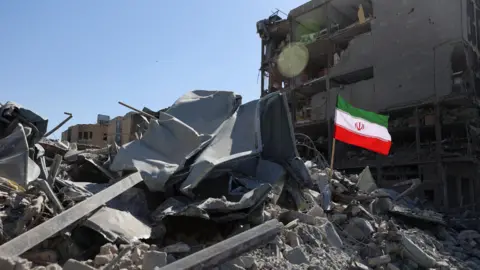
The US-based Human Rights Activists News Agency (HRANA) said on Wednesday that 1,097 civilians have been reported killed in Iran since 28 February.
Of those, 181 were children under the age of 10 years old, the agency said.
"It's heartbreaking because I know that this won't make things better, it will just make things worse," Djafari-Marbini said.
"I know from speaking to NHS colleagues, most residents think this is utterly madness and it's only going to make things worse."
The US and Israel attacked Iran on Saturday in what they called "pre-emptive strikes".
Both countries claimed Iran was trying to rebuild its nuclear programme and develop missiles capable of delivering nuclear weapons, following targeted strikes last year by Israeli and US forces.
US president Donald Trump said these missiles could eventually reach the US, though this has not been supported by US intelligence assessments.
The US and Iran began negotiations and appeared to be making progress until Trump said he was "not happy" with the way the talks were going. Hours later the US and Israel began attacking.
Iran has since described the attacks as "unprovoked, illegal and illegitimate", and has carried out widespread missile and drone attacks in response.
Trump declared on Tuesday that Iran's air defences, air force, navy and leadership were "gone".
"We've had a very powerful impact. Virtually everything they had has been knocked out now. Their missile count is going down," he said.
 ABEDIN TAHERKENAREH/EPA/Shutterstock
Masood Khanloo left Iran 27 years ago, and said he had thought about flying the Persian flag - which was used before the 1979 Islamic Revolution - in his restaurant on the Cowley Road.
He said: "I put the flag up this weekend and two of my friends said [to me] 'there are many people who do not like to see this flag'.
"In a friendly way, they said it's better to remove it - I just wanted to know what people in Oxford think about it."
He said that many people hoped that the death of the supreme leader "could lead to significant changes in the region and contribute to a more peaceful future".
"All around the world, they [Iranians] are happy that the terrorist regime is going after 47 years," he added.
Prime Minister Keir Starmer came under pressure from Trump after he delayed the approval of plans for US forces to use two British bases for the military action.
Responding to that move, Iran launched attacks against a British base in Cyprus - with Starmer announcing on Tuesday that a Royal Navy warship would be deployed to the eastern Mediterranean to bolster security around RAF Akrotiri.
You can follow BBC Oxfordshire on Facebook, X (Twitter), or Instagram.