Funeral for Royal Marine who survived WW2 prison

 Ben Birchall/PA Wire
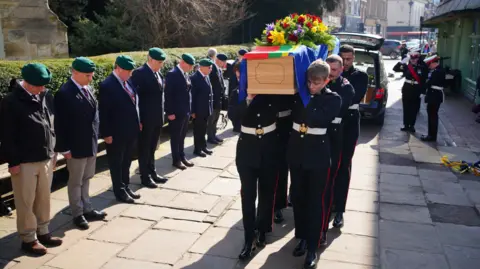
A funeral service has been held for an "extraordinary" World War Two veteran who survived three and a half years as a prisoner of war.
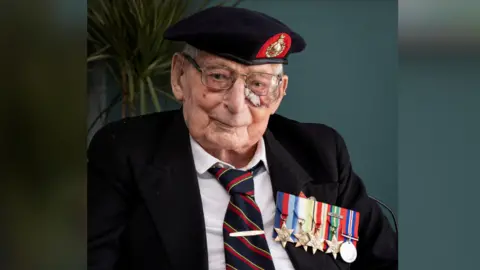
James 'Jim' Wren, the UK's oldest Royal Marine, survived the sinking of HMS Repulse in 1941 but was captured two months later by the Japanese in Singapore.
He escaped in 1945 after Japan surrendered, and returned home weighing just six stone (38kg). He attributed his survival to the bond between his comrades.
Wren passed away on 1 February aged 105. His funeral was held earlier at St Thomas' Church in Salisbury, Wiltshire, attended by more than 100 mourners.
 PA
PABorn in 1920, Wren joined the Royal Marines in 1939 at the age of 19.
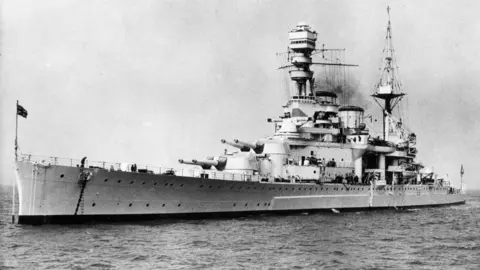
In December 1941, the battlecruiser HMS Repulse sailed from Singapore as part of Force Z alongside the brand-new HMS Prince of Wales.
Japanese aircraft attacked on 10 December and within hours, both ships were sunk.
A total of 513 crew members were lost onboard HMS Repulse, including 30 of the 55 Royal Marines. Wren was blown into the sea, drenched in oil, and survived by clinging to a life raft.
"I lost many good friends," he said, when he turned 100. "I was with them every day. I can still see their faces."
 Royal Navy
While attempting to rescue fellow marines in Singapore, Wren was captured and taken to Sumatra.
For the next three and a half years he endured brutal conditions - starvation, disease, and forced labour clearing jungle and building airstrips and railways.
Mortality rates were high but the marines shared food, protected one another, and maintained dignity in brutal conditions.
Wren even hid rice sacks to create shrouds for men who died, out of respect. When guards removed the sacks, he gathered jungle leaves to continue the practice.
Wren continued to serve for another six years after the war, including time aboard HMS Vanguard, before settling in Salisbury.
He had met his wife Margaret just before deployment and she waited for him throughout the war - without knowing if he was alive or dead.
They married a year later and were together for 74 years, until her death in 2020.
When it emerged that the wrecks of the two ships had been desecrated by illegal salvaging in early 2023, Wren began campaigning for protection of the war graves.
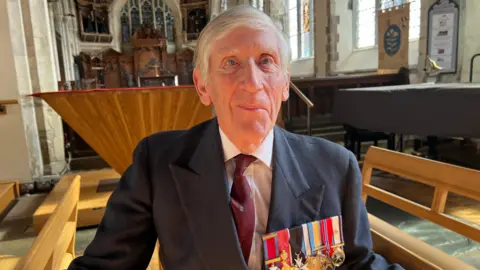
Major general Patrick Cordingley, from the Force Z Survivors Association, said this unwavering "loyalty" to his fallen comrades was what shone through most.
"He was an extraordinarily modest chap, when you look at what he went through," he said. "It's just amazing what he was clearly capable of doing.
"What more could you ask of a hero?"
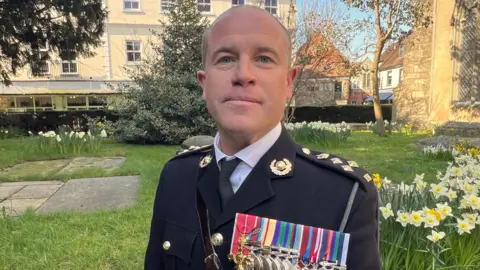
Brigadier Simon Rogers, assistant commandant general of Royal Marines, described Wren as "an incredible human being".
"The hardship is almost unimaginable. It would have been incredibly difficult, but he reflected on it with humility," he said.
"For those of us serving today, to look back at what those people did is an incredibly important thing - to consider the courage, resilience, and sacrifices they endured."
Follow BBC Wiltshire on Facebook, X and Instagram. Send your story ideas to us on email or via WhatsApp on 0800 313 4630.